
In short
Kaspi.kz runs over 70% of online retail in Kazakhstan, which makes it hard to ignore for any exporter shipping consumer goods into Central Asia. But the platform is a closed, Kazakhstan-specific system: KZT-only pricing, a local API, a seller cabinet in Russian and Kazakh, and rating rules that punish slow order confirmation more than almost anything else. This guide covers what a foreign seller actually needs to set up before the first shipment lands, not the marketing pitch about market share.
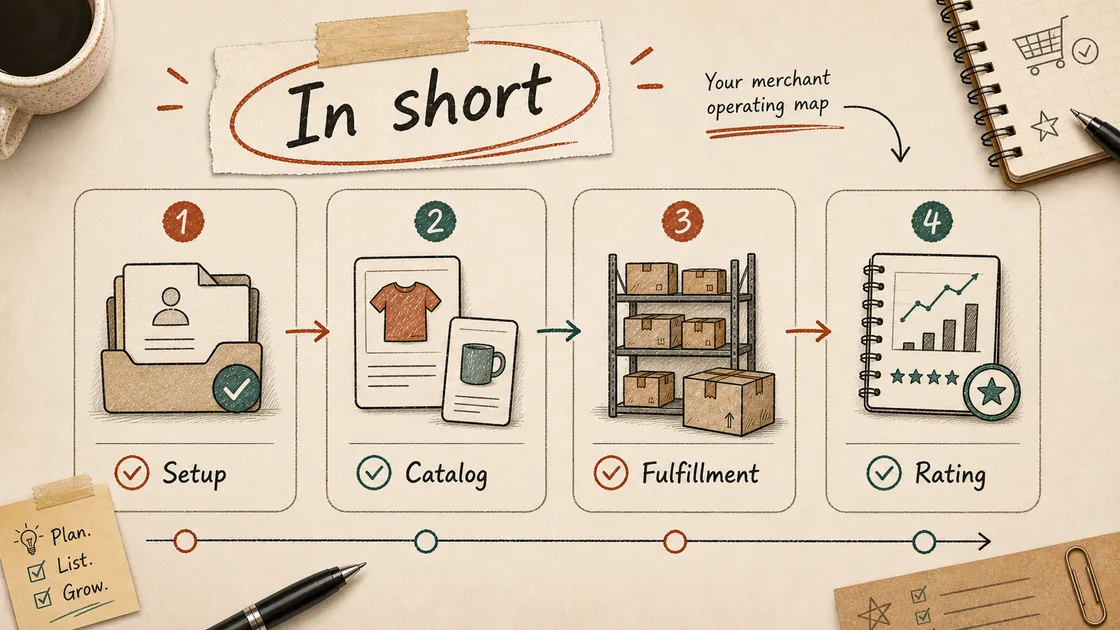
Most English-language material on Kaspi is investor research about the parent company. This is the operator's version: cabinet setup, the API token, commission math, and the mistakes that cost new sellers their rating in the first month.
Why Kaspi.kz matters for exporters
Kazakhstan's e-commerce market crossed roughly $3.4 billion in the first half of 2025, growing double digits year over year, and marketplaces now account for over 90% of that volume. Kaspi is not one option among several the way Amazon competes with Walmart and Target — it is closer to the only route into Kazakhstani consumers online. A seller with EAEU customs clearance sorted for Russia or Uzbekistan can usually reach Kazakhstan through the same logistics chain, but the storefront itself only works through Kaspi's own cabinet and API.

That concentration cuts both ways. Reach is enormous — the platform counts well over 700,000 active merchants and tens of millions of monthly users. Competition inside categories is also brutal, because every seller is fighting for the same "lowest price in category" placement, not for a differentiated storefront.
Setting up the merchant cabinet
The cabinet (Kaspi calls it the Merchant Cabinet, separate from the Kaspi Pay consumer app) is where catalog, pricing, orders, payouts, and the API token all live. Registration requires a Kazakhstani legal entity or a registered representative — a foreign company typically works through a local subsidiary, distributor, or fulfillment partner rather than registering directly from abroad. This is the first decision point for exporters: sell through a local partner's storefront, or set up your own legal presence to hold the seller account.
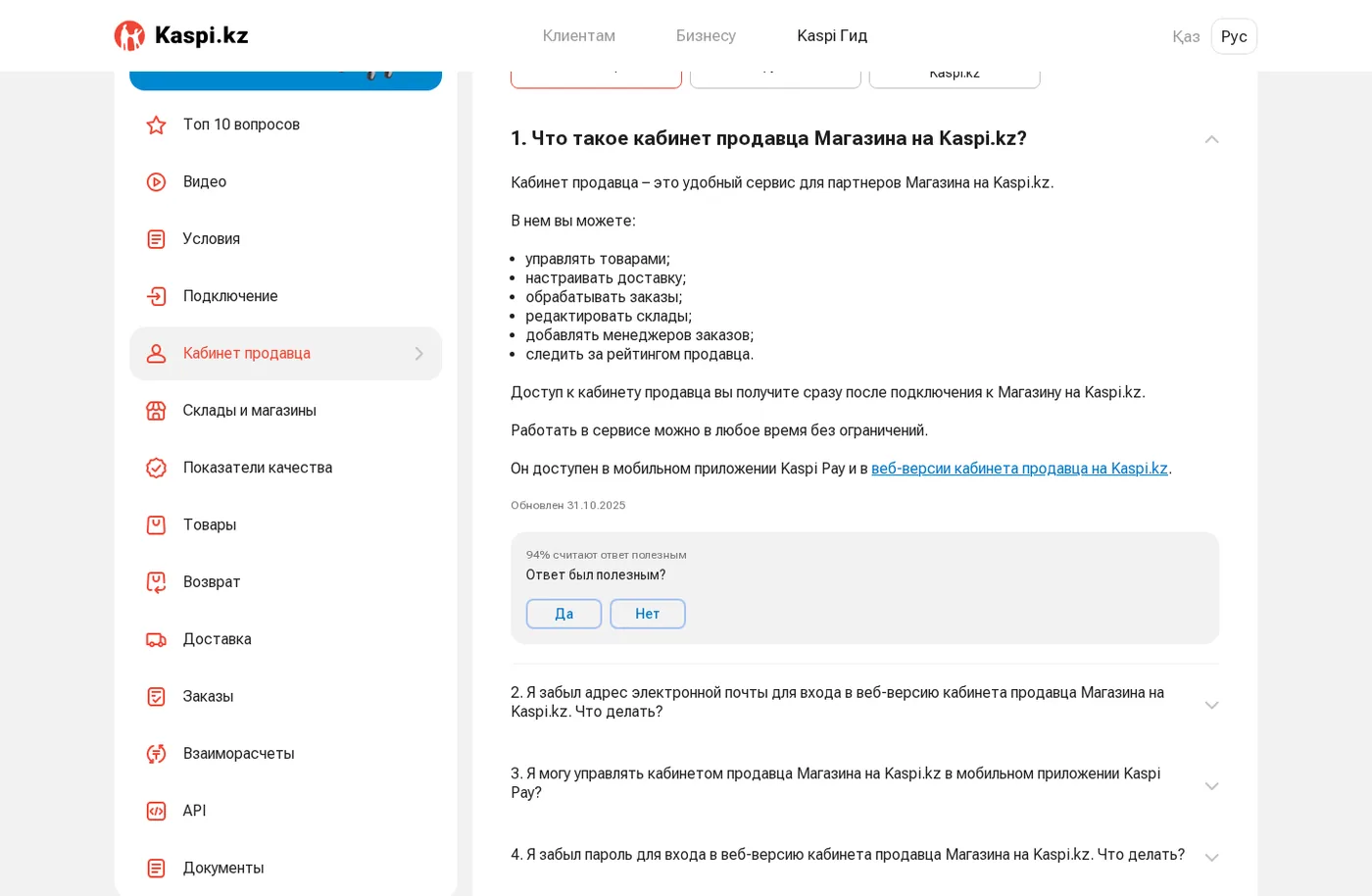
Source: the official guide.kaspi.kz seller cabinet page, public page captured in July 2026.
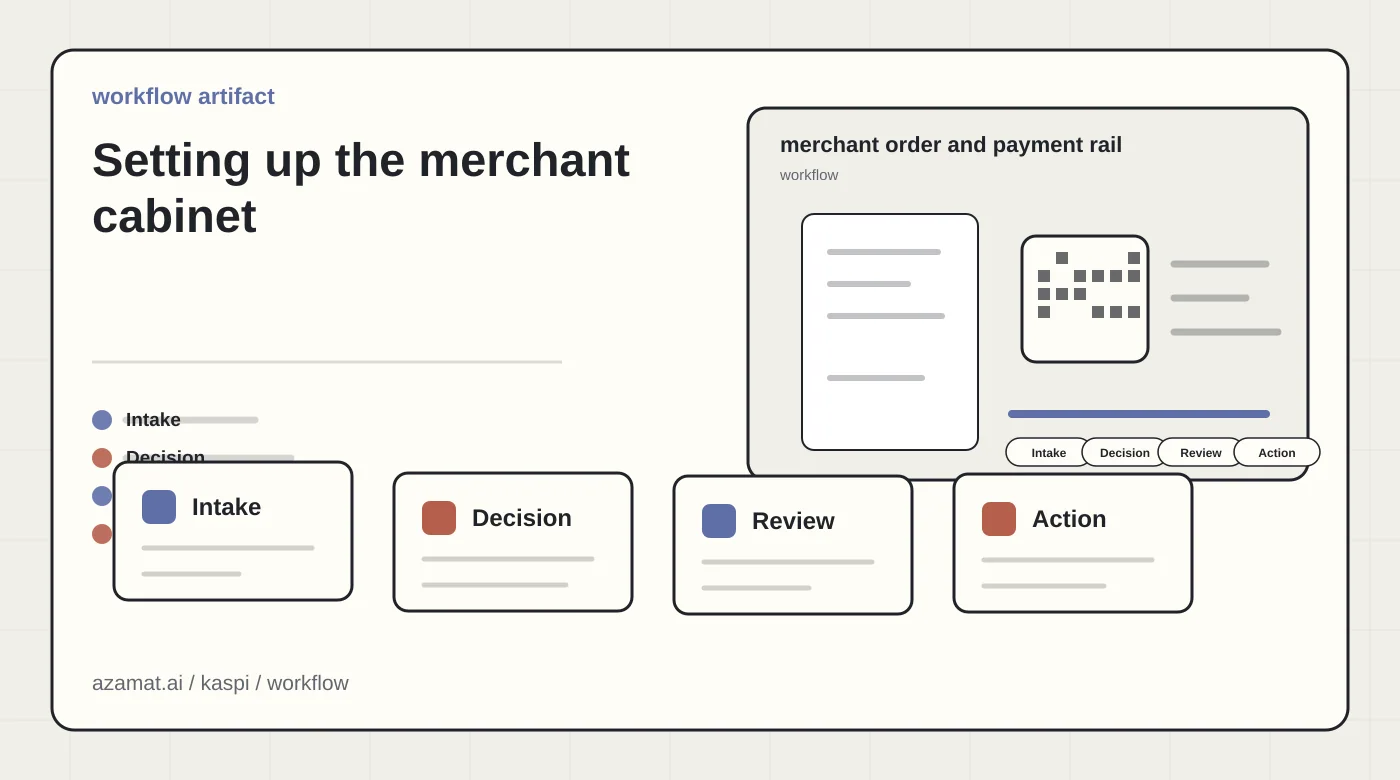
Once inside, four areas matter operationally: the product catalog (tied to category-specific commission rates), the order feed, the finance section (payouts net of commission), and settings, where the API token lives. Multi-user access lets a company give warehouse staff catalog access without exposing payout data. This is the same operational shape as any GPT integration work we do for Kazakhstan-facing businesses: a system of record, a permission boundary, and an integration point, not a single dashboard everyone logs into.
The API token and integration
Under Settings → API Token, the account owner generates a key that lets external systems — a CRM, a warehouse management system, an order bot — read and write orders and product data without a human logging into the web cabinet. It does not expire on its own; it can be regenerated manually if compromised.
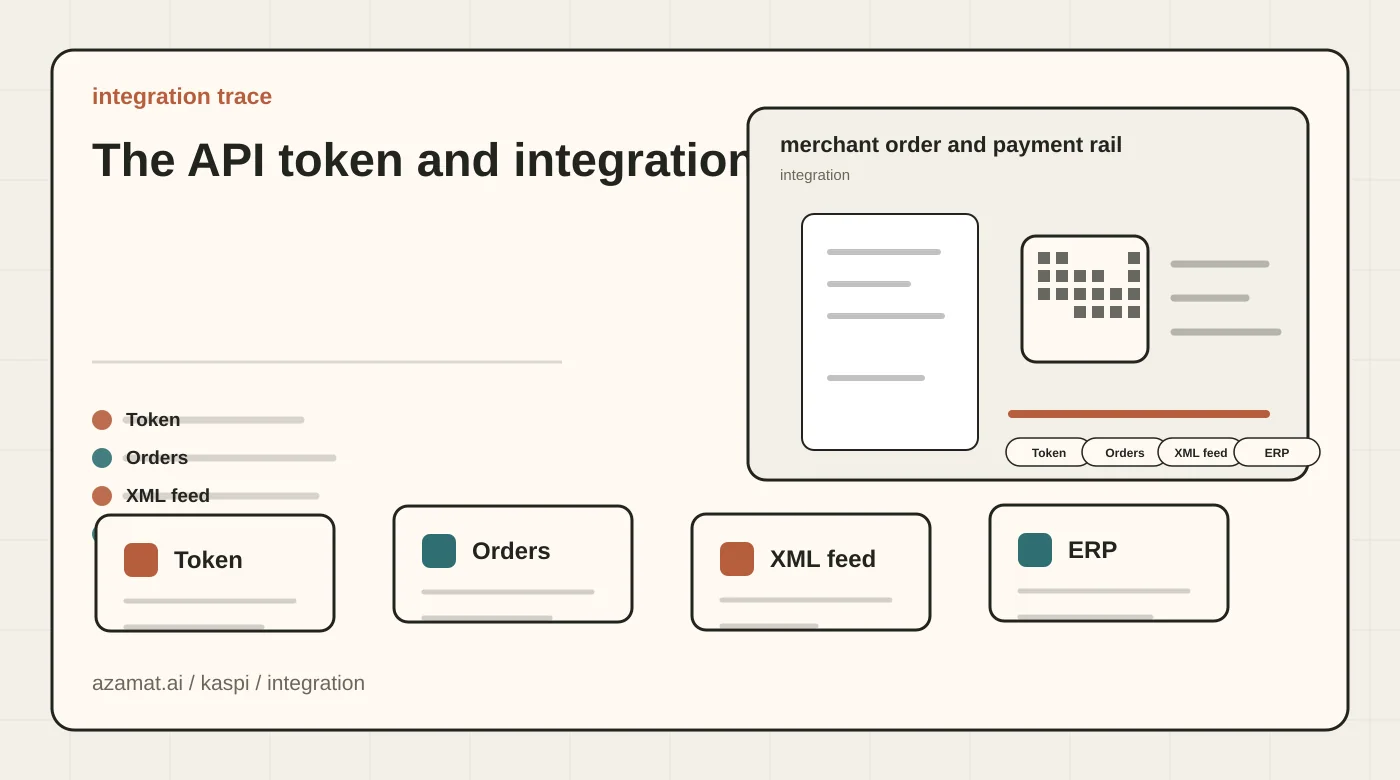
For an exporter running fulfillment through a local partner or 3PL, this token is the connection point between Kaspi's order feed and whatever inventory system already tracks stock: an ERP, a spreadsheet, or a warehouse management platform on the Kazakhstan side. Treat the token like any other production credential — scoped access, no sharing over chat, rotation if a contractor relationship ends. We built a similar operating layer for marketplace sellers in sellerbox.ai: order and inventory workflows wired into the seller's actual process, not a chatbot bolted on the side.
Commissions and the real margin
Commission is category-based and is deducted from the sale price, not added on top — model this into landed cost before setting KZT prices, not after the first payout. Rates vary widely by category: apparel and home goods sit in double digits, electronics and higher-ticket items sit lower. Since early 2026, the cabinet displays commission net of VAT, with tax calculated separately — a change that affects the reported rate without necessarily changing what a seller actually nets.
If a product sells on Kaspi Red instalment financing, an additional installment fee applies on top of the base commission, scaling with the instalment term. Combined with import duty (VAT around 12%, customs duty varying by HS code) and logistics into Kazakhstan, exporters need a fuller landed-cost model than a typical domestic marketplace calculation — closer to what a company already selling on Amazon or Zalando across borders would build for VAT and duty, just for a different tax regime.
Orders, statuses, and the rating mechanic
Orders move through a status chain — new, accepted, shipped, delivered, or cancelled/returned — and each step has a time window. Missing the confirmation window counts against seller performance even before a customer complains. For a seller managing fulfillment through a partner or 3PL located hours away from the warehouse, that window is often the tightest constraint in the whole operation, tighter than the logistics lead time itself.
The seller rating is calculated over a rolling 90-day window and starts showing after the first several orders. It weighs confirmation speed, cancellation rate, return rate, and reviews. Fall below a threshold and the platform's search ranking suppresses the storefront — a direct sales hit, not just a cosmetic score. Recovering a suppressed listing usually costs more in discounting than maintaining the rating would have cost in staffing.
Where sellers lose money
Four patterns show up repeatedly with new sellers, foreign or local. Listing a product live before stock is confirmed on the Kazakhstan side, which produces cancellations the moment an order comes in. Turning on automated price-matching against category competitors without a floor — the bot keeps undercutting until margin is gone, and clawing the price back up loses the ranking gained. Ignoring the order-confirmation clock until the rating drops, often before anyone notices why conversion fell. And handing the API token to a local integrator without knowing what data leaves the account and where it lands. The same discipline applies to any AI for sales workflow that touches pricing or customer commitments: a bot with write access needs a floor, a log, and an owner.
There's also a scale problem specific to cross-border sellers: a partner or subsidiary starts at ten orders a day and manages fine by hand, then volume triples and the same one or two people are now the bottleneck for every customer message and every status update.
When to automate
Once order volume outpaces what a small local team can confirm and answer inside the platform's time windows, the fix is not always another hire — it's usually automating the repetitive half of the job first. Customer messages about delivery address, stock, and instalment terms are the highest-volume, most templated conversations in the whole flow, and they translate reasonably well to a scripted AI agent connected through the API token, rather than a rules-only chatbot that breaks on the first unusual message.
The second automation target is syncing stock and order status between whatever system runs the actual warehouse — an ERP, a 3PL platform, a spreadsheet — and the Kaspi cabinet, so a sold-out listing goes inactive automatically instead of generating cancellations. A narrow pilot works best here: one storefront, one customer channel, two to three weeks, measured against response time and rating stability rather than rolled out across the full catalog on day one. Budgeting that pilot follows the same logic as AI implementation cost for any Kazakhstan-facing project: narrow scope first, integrations second.
FAQ
Can a foreign company sell directly on Kaspi.kz without a Kazakhstani entity?
In practice, most cross-border sellers operate through a local legal entity, distributor, or fulfillment partner rather than registering the seller account from abroad. Confirm current registration requirements before committing to a launch timeline.
How is Kaspi commission different from a typical marketplace fee?
It is category-based and deducted from the sale price, with an added instalment fee if the product sells on Kaspi Red financing. Since 2026 the cabinet shows the rate net of VAT, which changes the number without necessarily changing the payout.
What tanks a new seller's rating fastest?
Missing the order-confirmation window and letting cancellations pile up, more than any single bad review. The rating is a rolling 90-day calculation, so a bad week is visible for months.
Where should automation start for a cross-border seller?
Customer messaging — delivery address, stock, instalment questions — connected through the merchant API token, followed by stock-status sync between the warehouse system and the Kaspi cabinet.
If order volume from Kazakhstan is big enough to justify the customs and logistics setup, it's usually big enough to justify automating the storefront operations around it rather than running the cabinet by hand.