Short version
A finished AI ad from our team costs $20 per second. A 15-second video is $300, a 30-second one is $600, and a one-minute video comes at a discount, $1,000. A pack of 10 short videos, each up to 15 seconds, is $2,000, a third less than the per-second rate.
That rate covers the whole job, not just generation: the script, characters and scenes, the shots themselves, editing, voice-over, music, 9:16, 1:1 and 16:9 versions, and two rounds of revisions. The shortest video we take on is 15 seconds. Anything longer than two minutes, a series, or complex 3D work is quoted separately.
The rest of this article explains why a second of AI video costs real money when a model renders a shot in a minute, when a do-it-yourself tool is enough, and how to avoid paying for the same scene twice.
Why studios price by the second
The length of the finished video is the simplest way to agree on a price before work starts. The client knows what 15, 30, or 60 seconds will cost. The team knows how many scenes it has to build, check, and cut together.
A per-second rate has one weakness: two 15-second videos can be very different jobs. One product on one background across three shots is not the same as a recurring character who talks, walks through five locations, and holds the product. So the rate covers a typical ad, and anything unusual gets looked at shot by shot before we name a number.
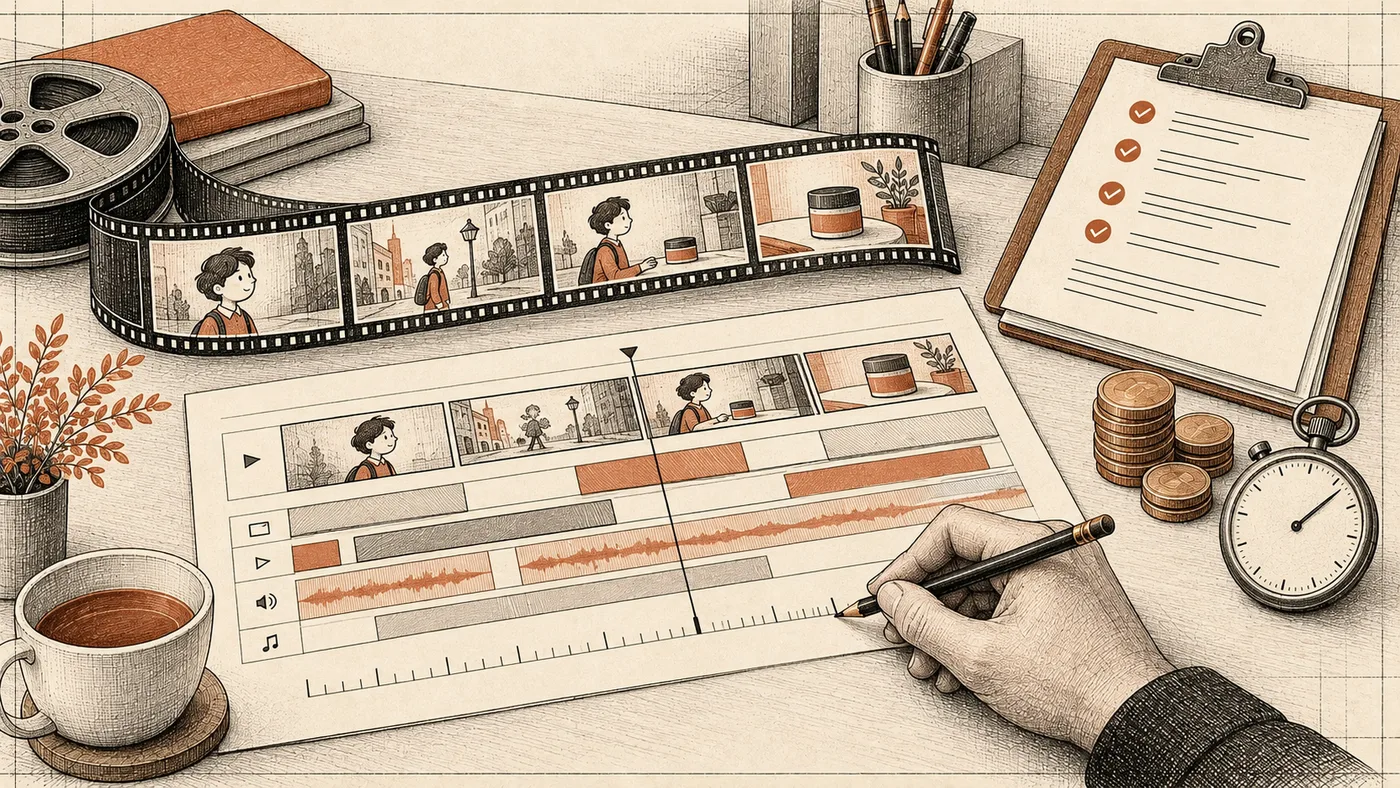
What a second of finished video includes
Generation is the smallest part of the time. Most of the effort goes into making the shots tell one story and making the video safe to publish under a brand name.
- Script and storyboard. The hook in the first seconds, the structure, key scenes, voice-over, and call to action. A problem is cheaper to fix in the storyboard than after dozens of generations.
- Characters, props, and locations. The hero, the product, and the setting in one consistent style. A face, an outfit, or a product shape should not drift from scene to scene.
- Scene generation. One usable shot often takes dozens of attempts: a hand moves oddly, a logo smears, the light changes. Selecting and regenerating is the hidden bulk of the work.
- Editing and clean-up. Pacing, color, graphics, captions, and removing artifacts.
- Sound. Voice-over, music, and sound design.
- Formats and revisions. Cuts for Reels, TikTok, YouTube, and paid social, plus two rounds of revisions within the approved script.
Our Yagusha case study shows this on a real project: first we found the character and locked her look, then made the song, the pilot clip, and a four-video series with the same heroine.
Price by length
| Video | Price | Good for |
|---|---|---|
| 15 seconds | $300 | Idea tests, stories, short Reels or TikTok ads |
| 30 seconds | $600 | Paid social, YouTube pre-roll, product presentations |
| 60 seconds | $1,000 | Product demos, brand films, music clips |
| 10 videos up to 15 seconds | $2,000 | A content-plan series in one style |
| Over 2 minutes | Quoted | Long formats, series, complex scenes |
The minute and the pack cost less than the rate for the same reason: characters, style, and shot rules are built once and then carry the whole video or series. Several versions of one ad for different audiences, languages, or lengths are priced the same way, from the storyboard.
What makes it cost more
The rate covers a typical ad. These are priced separately because they take far more generations or manual work:
- a recurring character who speaks on camera and interacts with the product;
- a photorealistic product in close-up, where every packaging detail is visible;
- 3D graphics and complex transitions between locations;
- localizing an existing ad: swapping actors, signs, phone screens, and the voice;
- new scenes added after the storyboard is approved. That is a new generation, not a revision.
Agree on that last point up front. A revision changes text, color, shot order, or a line of copy. "Let's have her walk into a café too" is a new scene, billed at the same rate.
When to make it yourself
Not every video needs a studio. If you want to test an idea for yourself, illustrate an internal presentation, or post something simple on social, a subscription to a video generator and a couple of evenings will do. Freelance marketplaces also sell AI clips cheaply, which is fine for a hypothesis test.
A studio earns its fee when the video carries your brand and has ad spend behind it. Then you need things a generator does not give you on its own: a stable character, an undistorted product, proper sound, cuts for every placement, and someone accountable for the result and the deadline.
If your team wants to learn to make AI video in-house, take a look at our AI courses and corporate AI training. For a series of ads, it is usually faster to hire an AI video team.
AI video or a shoot: where the money differs
AI video saves the most when a shoot would need sets, locations, casting, and several shooting days: a fantasy world, a street you cannot close, a product in a scene that does not exist. When you need real people, genuine emotion, or a real product in someone's hands, a shoot is often more honest and not more expensive.
We compare both options on timing, revisions, and risk in AI video production vs. traditional filming.
How to brief a studio so the price holds
Prices grow because the task is vague, not because of the model. Bring these to the first call and the quote will match the invoice:
- Where the video will run: Reels, TikTok, YouTube, paid social, a presentation.
- Length and required formats.
- What the video has to do: sell, explain the product, test an idea.
- Brand guidelines, logo, product photos, colors, and fonts.
- Two or three reference videos you like, and one you don't.
- Constraints: claims the brand cannot make, required disclaimers.
- Who approves the script and the final cut.
With a brief like this, the first review takes one or two working days, and a simple video is ready a few days after the script is approved.
Bottom line
AI video costs money because the script, shot selection, editing, and sound all happen off screen. Our rate is $20 per second of finished video, and everything above is included. If the video is a test, start with 15 seconds. If you need a content-plan series, the pack of 10 short videos is the better deal.