In short
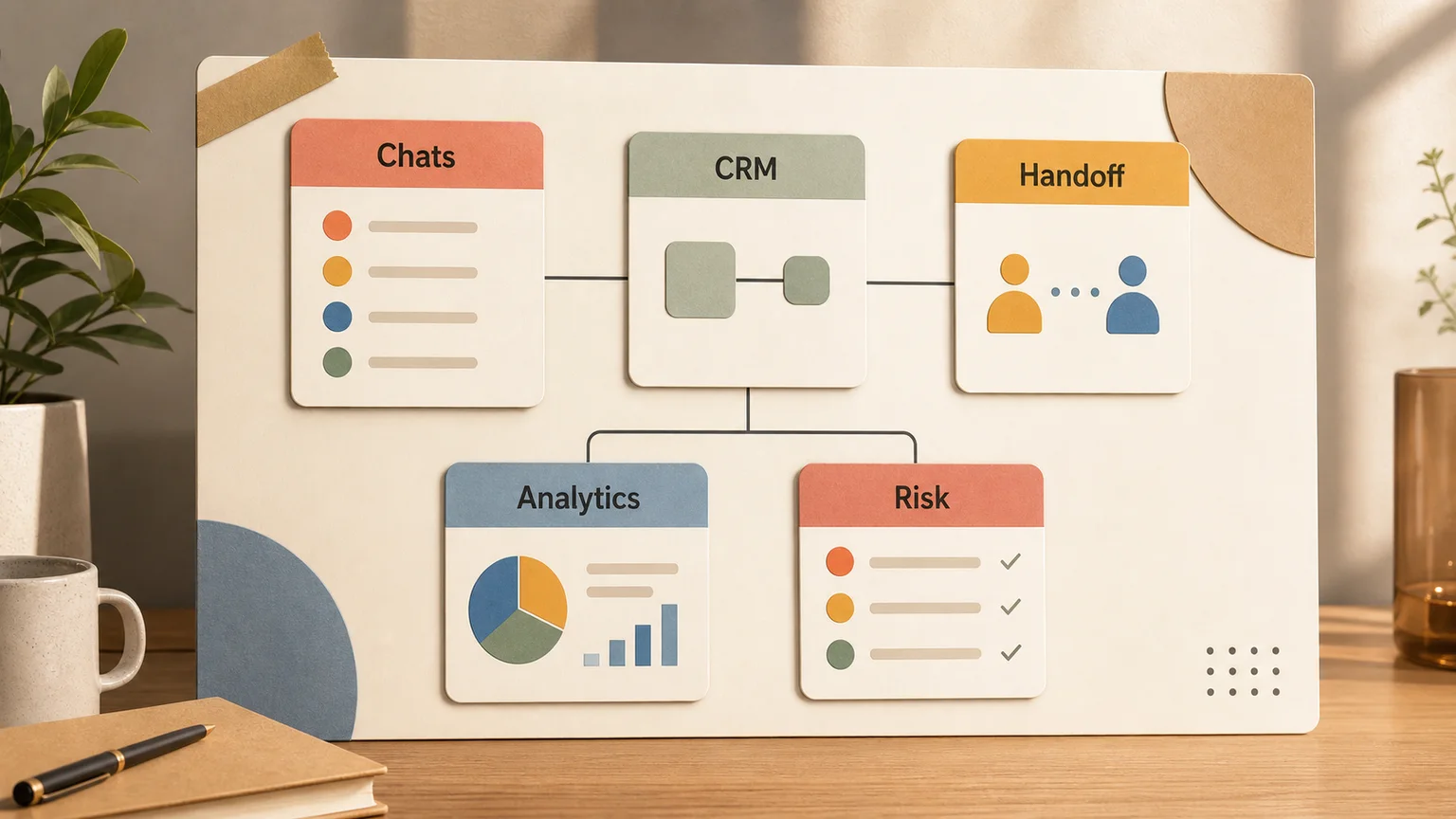
Wazzup is a connector, not a CRM and not an AI agent. It pipes WhatsApp, Instagram, Telegram, and a handful of other channels into amoCRM or Bitrix24 so a conversation shows up inside a deal card instead of living on a rep's personal phone. That's the whole product, and for teams already running amoCRM or Bitrix24 as their sales system of record, it's usually a same-day setup that solves a real problem: messages scattered across phones instead of logged against a deal.
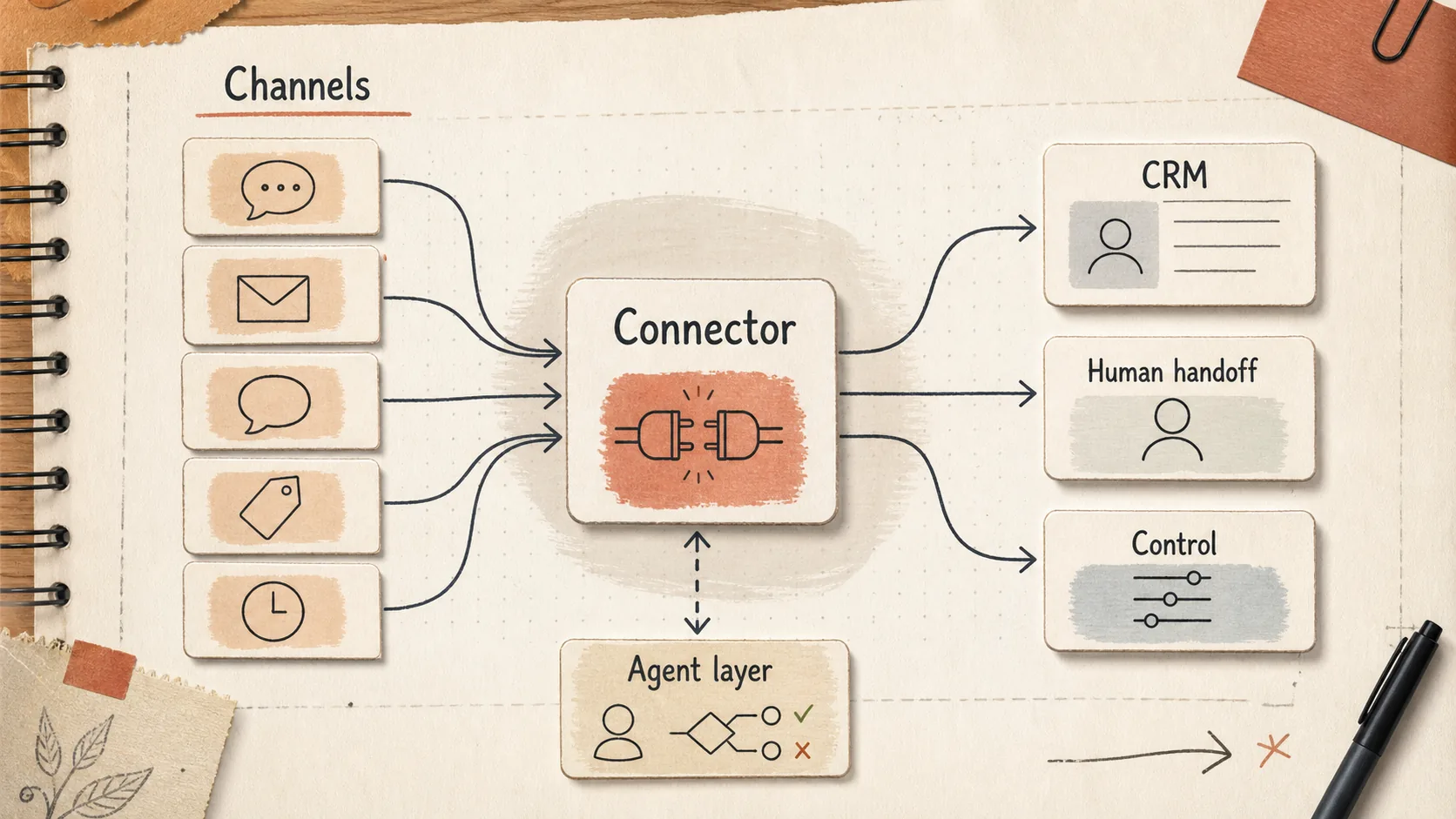
The ceiling shows up fast once a business wants more than visibility. Wazzup doesn't qualify leads, doesn't read intent, doesn't check inventory or order status, and doesn't decide when to escalate to a human. It moves text from one place to another. If your WhatsApp volume has grown past "reps can keep up," the real question isn't which Wazzup tier to buy — it's whether you need a purpose-built AI agent sitting on top of the WhatsApp Business API instead of a message-forwarding layer.
What Wazzup actually does
Under the hood, Wazzup is a bridge between a WhatsApp number and your CRM. It connects two ways: a QR-code session (the same mechanism as WhatsApp Web) or the official WhatsApp Business API (WABA), a separate paid channel that uses Meta-approved message templates.
Once connected, conversations appear inside the deal card. Reps read and reply from the CRM instead of switching to a phone. The tool can auto-create a deal on first contact, tag conversations by keyword, show delivery status, and connect several channels at once — WhatsApp, Instagram, Telegram, VK, Avito — depending on your market. UTM tags and website-visit data can flow into the deal card, but that's gated behind the higher pricing tier.
Voice notes, photos, and documents pass through as attachments. Wazzup doesn't transcribe or analyze them. Auto-replies are template greetings or keyword-triggered rules, not a stateful conversation that remembers what the customer said three messages ago.
Pricing: what you're actually paying for
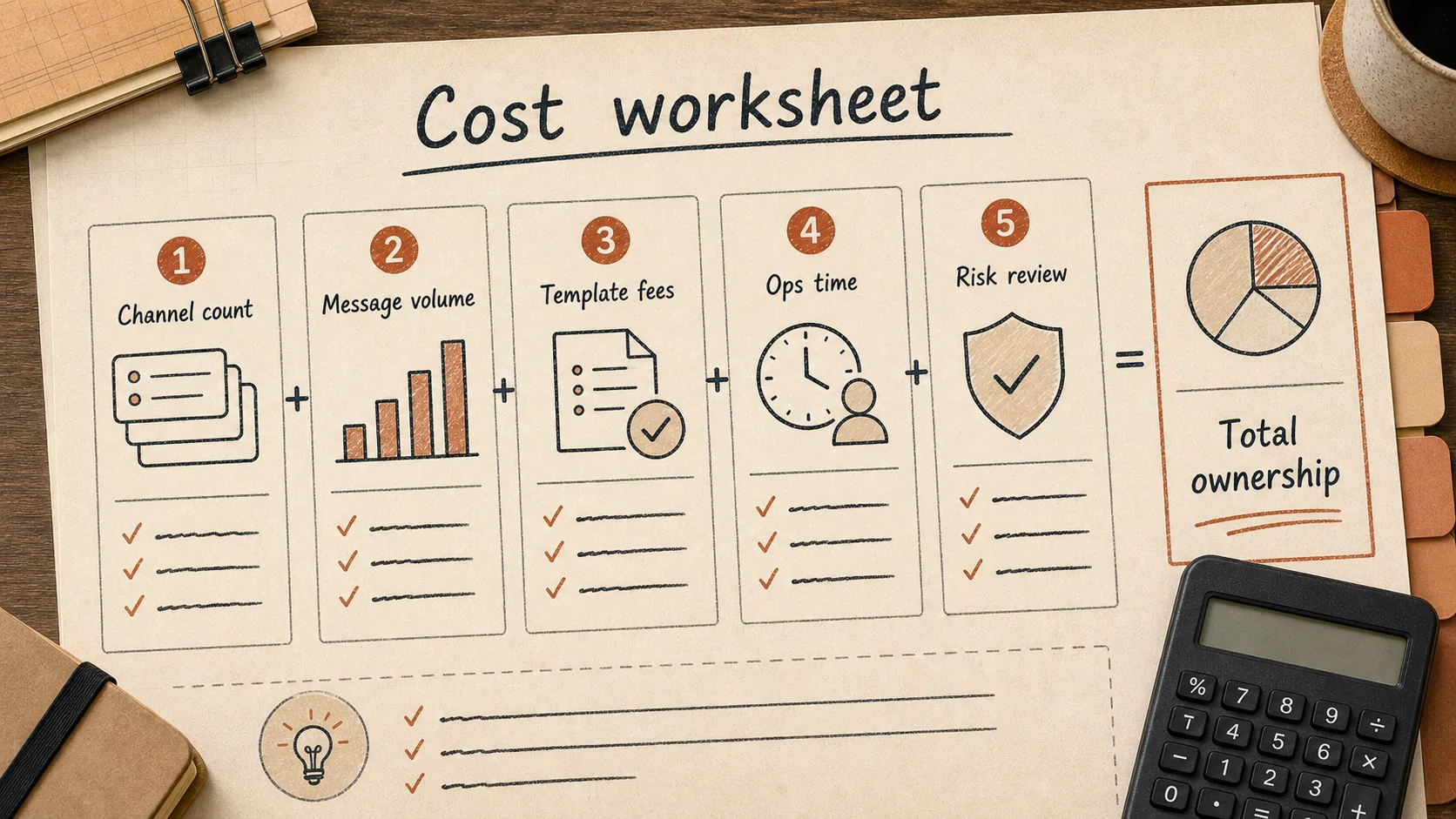
Wazzup prices per connected channel — meaning per phone number — not per seat. Unlimited CRM users are included; you pay for the numbers you connect. The published tiers are roughly:
- Entry tier — around $9-10/month per channel. Standard QR-code WhatsApp connection, a cap on monthly conversations, and you can only message first in reply to an inbound message from the customer.
- Mid tier — around $45-50/month per channel. Removes the conversation cap, unlocks UTM and site-visit data passed into the CRM, and adds broader analytics.
- WABA tier — around $65-70/month per channel, plus separate template-message costs billed at Meta's rates. This is the official API channel: you can legally message a customer first through an approved template, without the account-ban risk that comes with unofficial sessions.
Annual prepay typically brings a meaningful discount, and most providers offer a short free trial per channel. The jump from entry to mid tier is where most teams first do real math on what "just a chat inside the CRM" costs once volume grows past a single rep.
Where the ceiling actually is
The first limitation is architectural. A QR-code connection is functionally a parallel WhatsApp Web session — it doesn't run alongside the phone app cleanly, and the underlying number stays subject to ordinary WhatsApp account rules rather than Business API protections. The risk of a number getting flagged under heavy outbound messaging is a WhatsApp platform constraint, not something specific to Wazzup, but it's the entry tier that runs into it first.
The second is a platform rule, not a Wazzup choice: you can only message a customer first if they messaged you within the last 24 hours, or if you use an approved WABA template. Any "re-engage a lead who went quiet three days ago" workflow needs either the WABA tier or a human doing it manually.
The third, and the one that matters most, is that Wazzup doesn't reason about the conversation. It moves a message from one place to another. It doesn't qualify a lead against your criteria, doesn't check an order status against a backend system, doesn't decide when a conversation needs a human, and doesn't hold context across separate conversations beyond what lives in the CRM card. Anything that looks like "smart replies" is either a keyword-triggered template or a separate automation built with Bitrix24 bots or amoCRM's own scripting — and that's a different level of build than the connector itself provides.
User reviews reflect the split. Some teams report responsive support and fast setup; others report reliability issues — contacts disappearing, messages stuck in a pending state, the app going down for stretches during peak load. That's a minor annoyance for a single-location business. For a sales team running hundreds of conversations a day, it's lost revenue.
Alternatives worth comparing
Umnico is the closest direct competitor: cheaper entry pricing, and a stronger focus on omnichannel inbox management across multiple platforms rather than deep amoCRM/Bitrix24-specific integration. If the goal is one inbox across five channels without being tied to a specific CRM's data model, Umnico belongs in the same test set rather than being treated as a drop-in replacement.
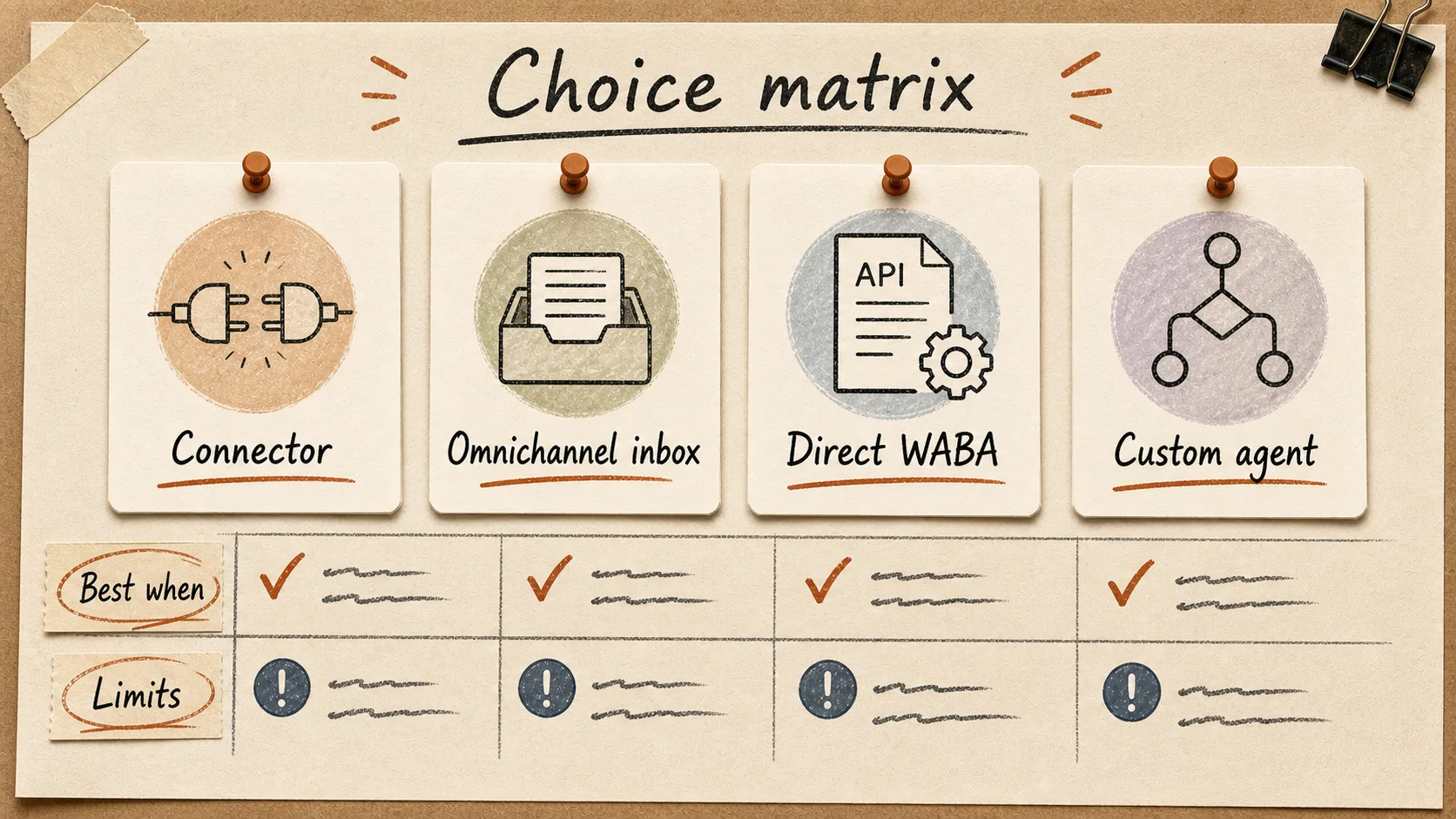
Native CRM AI layers. Both amoCRM and Bitrix24 now ship their own built-in tools for first-contact automation — Bitrix24 with CRM bots and automation rules, amoCRM with an AI agent for initial conversations. These are good defaults for standard flows and weaker once your qualification logic gets specific to your business.
Direct WABA providers. If the actual need is bulk notifications or transactional messages — appointment reminders, order-status updates, delivery windows — rather than CRM visibility, going straight to an official WhatsApp Business Solution Provider can be cheaper and more reliable than routing through a connector layer.
A custom AI agent on top of the WhatsApp Business API. This isn't really a Wazzup alternative in the same category — it's a different class of tool. Instead of forwarding a message into a CRM card, the agent reads conversation history, infers intent, checks order or inventory data, qualifies the lead against your rules, and escalates to a human only when a human is actually needed.
When Wazzup is enough, and when it isn't
Wazzup is the right call when you run one or two channels, volume is manageable, reps can keep up in real time, and the job is simply not losing messages and having them visible in the CRM. For a small agency, a local service business, or a sales team of a few reps, it's cheaper and faster than building your own integration.
It stops being enough once a business needs: lead qualification against non-trivial criteria; real-time cross-checks against order, inventory, or account data; a conversation flow that differs by customer segment; handling of voice notes and documents as actual content rather than opaque attachments; or a response-time SLA that holds up during a spike — a promotion, a seasonal peak, a product launch.
At that point the useful question isn't "upgrade to the WABA tier or not" — it's which parts of the workflow Wazzup handles well and which parts need a purpose-built AI agent instead. The common working setup keeps a connector like Wazzup as the transport layer between WhatsApp and the CRM, and puts an agent on top that reads context, makes decisions against your rules, and hands a rep only the conversations that genuinely need one. The distinction between a bot builder and a real agent is covered in bot builder vs. custom AI agent — the same logic applies here: the more your qualification rules diverge from a generic flow, the sooner a connector alone becomes the bottleneck.
If WhatsApp is already your primary sales or support channel and a connector is only forwarding messages without processing them, it's worth reading how AI answers customers in WhatsApp — it covers what actually needs to be wired up before an agent removes load from a team instead of just looking good in a demo. It's also worth auditing the CRM integration itself: often the bottleneck isn't the messenger, it's that the CRM turns into a pile of unprocessed conversations with no consistent handling logic once Wazzup is in place.
FAQ
Is Wazzup a CRM?
No. Wazzup doesn't store deals, track a pipeline, or replace a CRM. It's a connector that forwards conversations from WhatsApp and other channels into an existing amoCRM, Bitrix24, or similar system.
Can I message a customer first on Wazzup's entry tier?
Only in reply to an inbound message. Messaging first legally requires an approved WABA template, which means the WABA tier and Meta's template approval process.
Does Wazzup reply to customers using AI?
No. There's no meaning-level understanding of messages — just template auto-replies and keyword rules. An agent that understands intent and makes decisions is a separate build on top of the WhatsApp Business API.
How is Wazzup different from Umnico?
Wazzup is built around deep amoCRM and Bitrix24 integration specifically. Umnico is a broader omnichannel inbox with a lower entry price but less CRM-specific depth.
When is it time to move past Wazzup?
When WhatsApp becomes your primary sales or support channel and manual qualification and replies cost your team more time than the connector saves. That's the point to look at a custom AI agent that handles the routine work instead of just surfacing the chat inside the CRM.
If you're unsure whether to extend a Wazzup-based setup or build a dedicated agent, start by auditing a month of real conversations: how many are routine questions, how many times a rep manually checked an order or inventory system, and how many conversations the customer abandoned before getting an answer.