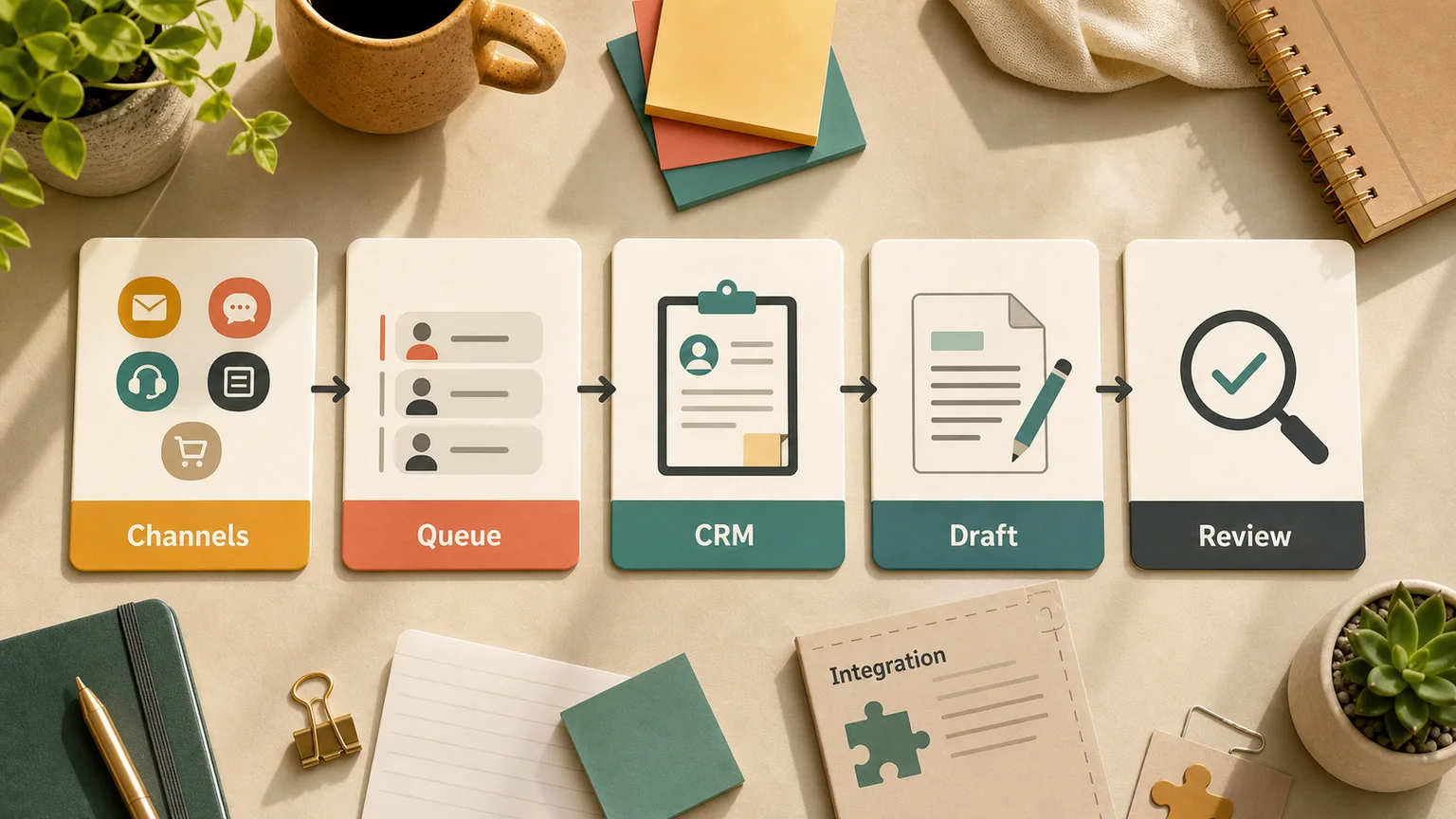
In short
Umnico is a messaging aggregator: it pulls WhatsApp, Instagram, Telegram, Facebook Messenger, VKontakte, and about twenty other channels into one inbox for support and sales teams. It also ships a free website chat widget and an API for teams that want to wire messages into their own CRM. Pricing is modular — every connected channel is billed separately, so the real monthly cost depends entirely on how many channels and seats a team actually needs, not on the number on the pricing page.
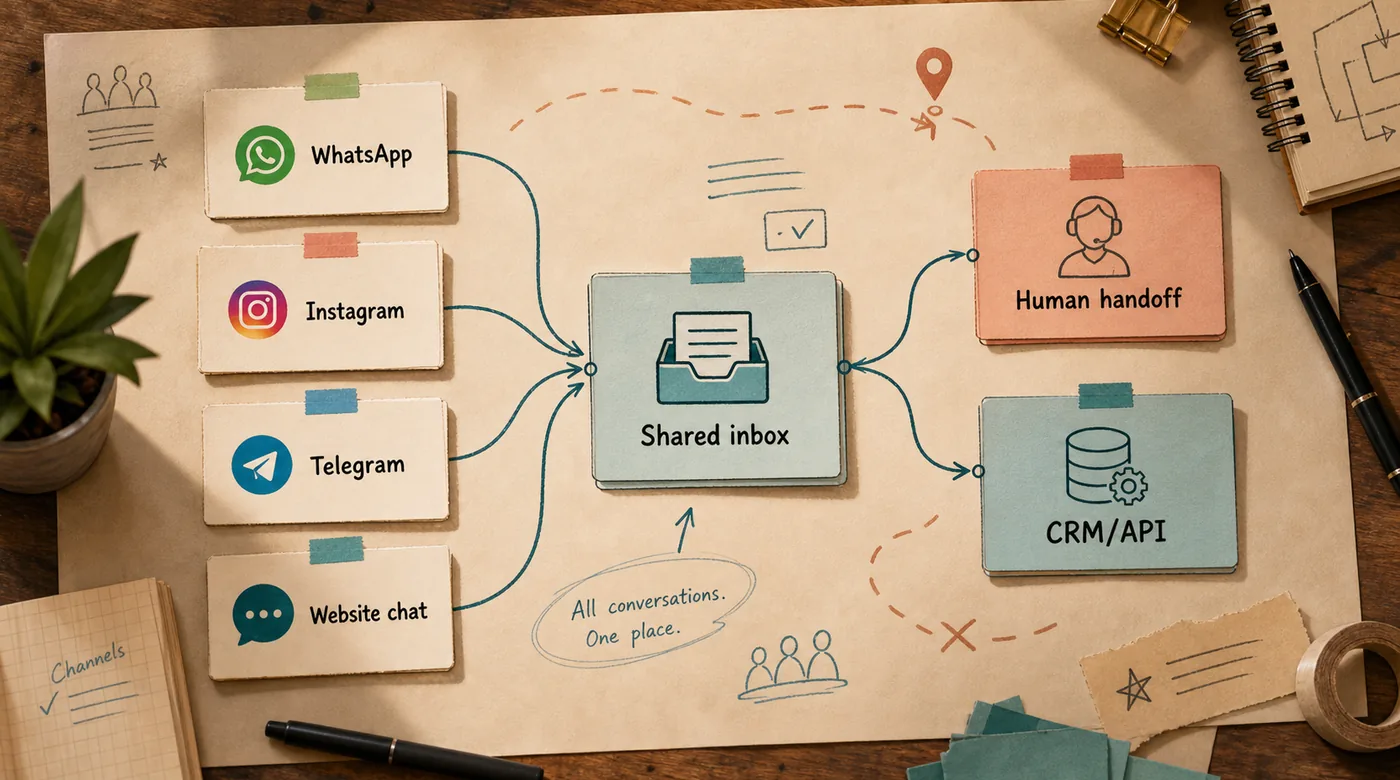
For a small team that just wants to stop switching between five apps to answer customers, Umnico can remove visible operational friction quickly. The ceiling shows up fast once a business wants more than "route the message to a human" — order lookups, availability checks, or replies that depend on what's actually in stock. At that point the conversation shifts from picking a pricing tier to building an AI agent on top of the CRM.
What Umnico actually does
The core product is Inbox: a single feed pulling in WhatsApp (both the regular app and the Business API), Telegram, Instagram Direct, Facebook Messenger, VKontakte, Viber, and a long tail of regional networks. Agents see full conversation history, can tag threads, hand off a chat to a teammate, and mark a deal closed without leaving the inbox.
The second layer is a lightweight pipeline: a kanban board for leads and basic source/conversion analytics. It's not a replacement for HubSpot or a full CRM — more of a stopgap for teams that haven't bought one yet.
Third is a free, brandable chat widget for the website, so a business can take inbound chat even before connecting any messenger app — the same starting point most teams use before deciding whether they need a full support agent or just a faster human queue.
Fourth is the API plus prebuilt connectors, most notably for Bitrix24 and amoCRM — both popular in CIS markets rather than the US or EU stack. Western teams evaluating Umnico should check this early: the native integration list leans CIS-heavy, and connecting it to Salesforce or HubSpot means building against the raw API rather than a plug-and-play app.
Auto-replies are rule-based: "if the message contains X, send template Y," plus a basic button-driven bot. That covers FAQ and after-hours coverage well. It does not cover a customer typing a free-form question about their specific order.
Pricing: what the sticker price hides
Umnico's pricing model is modular. The base Inbox tier is free with limited functionality; cost scales with the number of connected channels, seats, and the billing period (paying for 3-24 months upfront brings a discount of up to 35%). The trial is 3 days — not much room to run a real week of ticket volume through the tool before deciding.
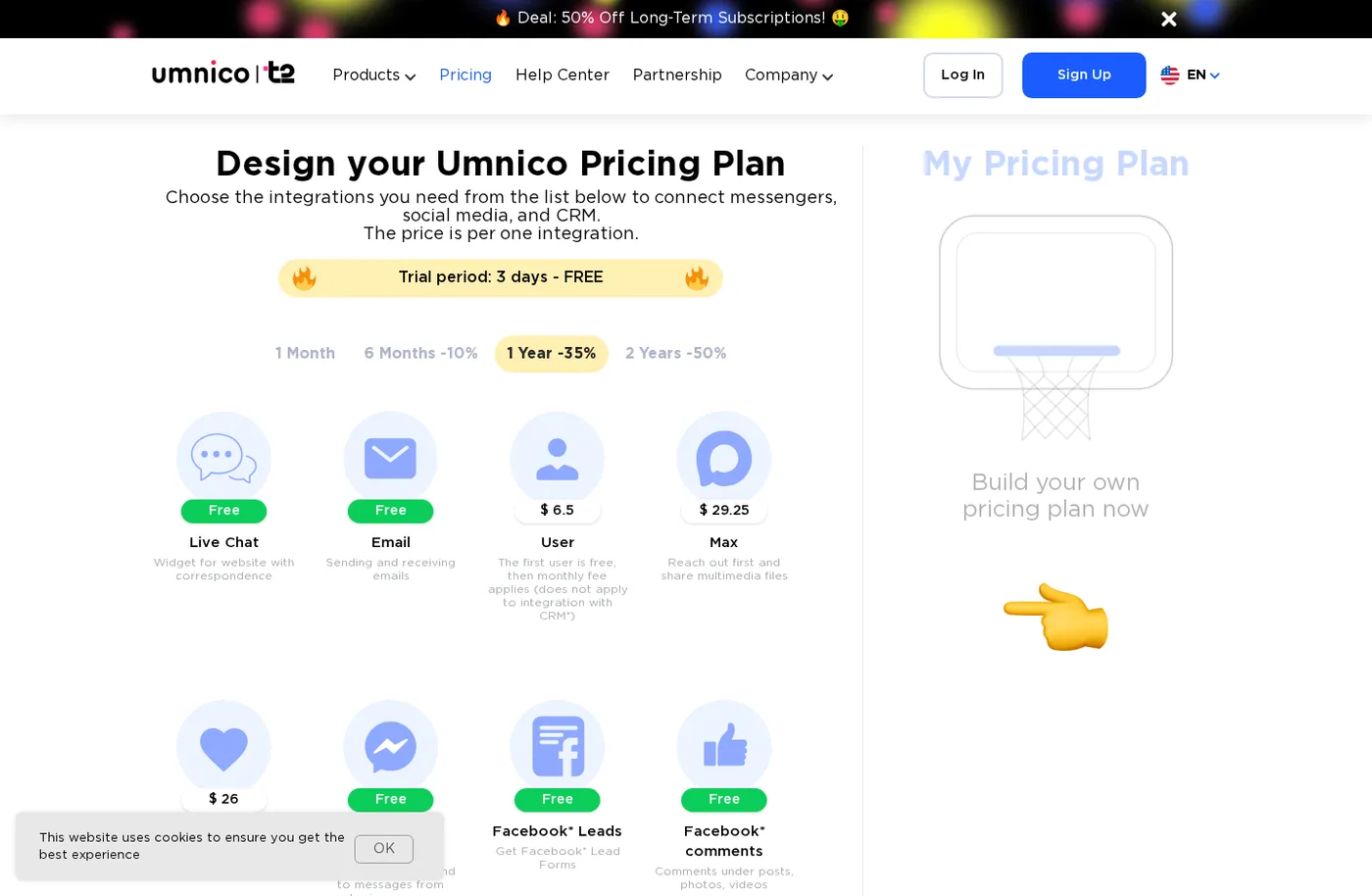
Source: the official Umnico pricing and payment page, public page captured in July 2026.
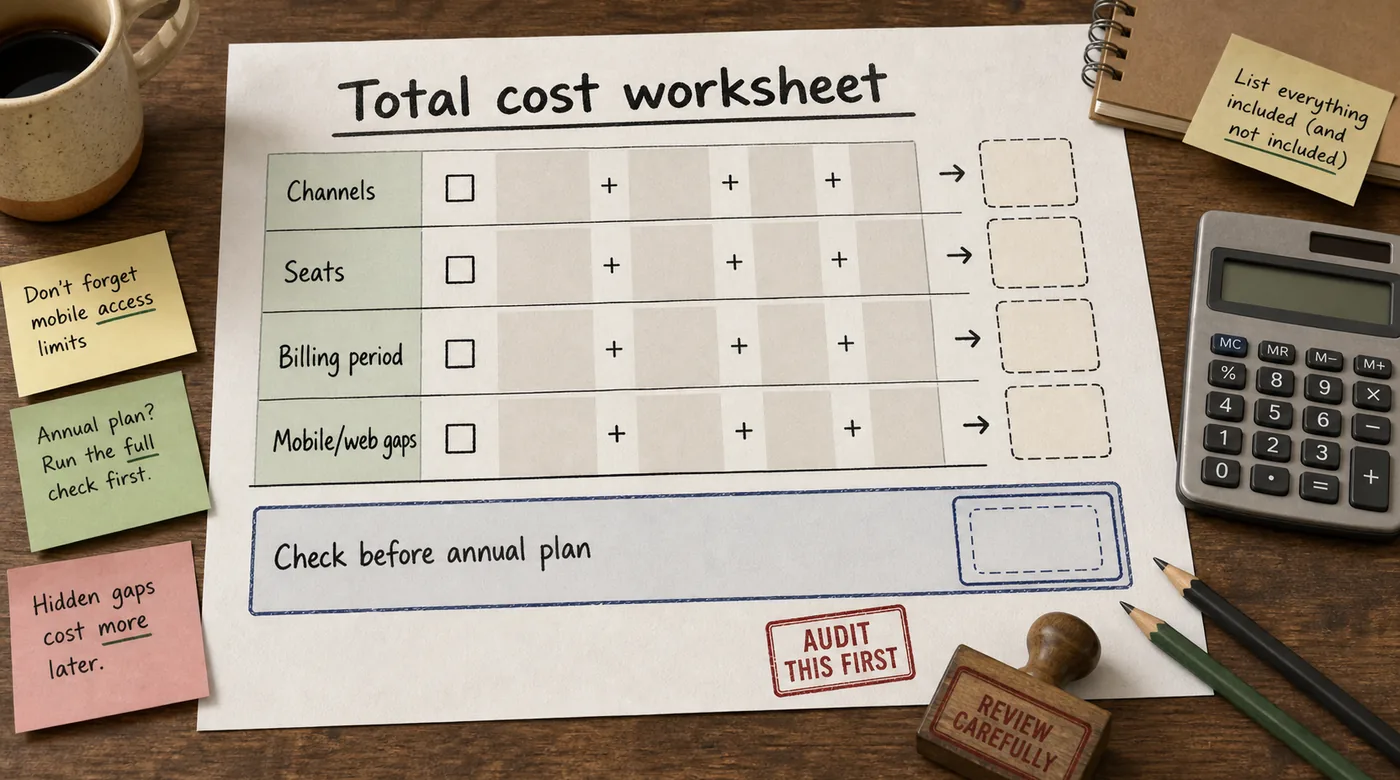
The detail that catches teams off guard: pricing is per integration, not per account. Three WhatsApp numbers plus Instagram plus Telegram in one workspace is five billed modules, not one flat "everything included" tier. A multi-location business running a separate WhatsApp number per branch will watch the aggregator bill climb toward what a full CRM seat would cost.
The mobile app works, but some functionality is web-only — worth testing against your actual workflow before committing to an annual plan, not after.
Umnico vs. the alternatives Western teams usually compare it to
Teams outside CIS markets researching Umnico are usually comparing it against a different shortlist than Wazzup: tools like Respond.io, Trengo, or WATI. The shape of the comparison is similar even though the names differ.
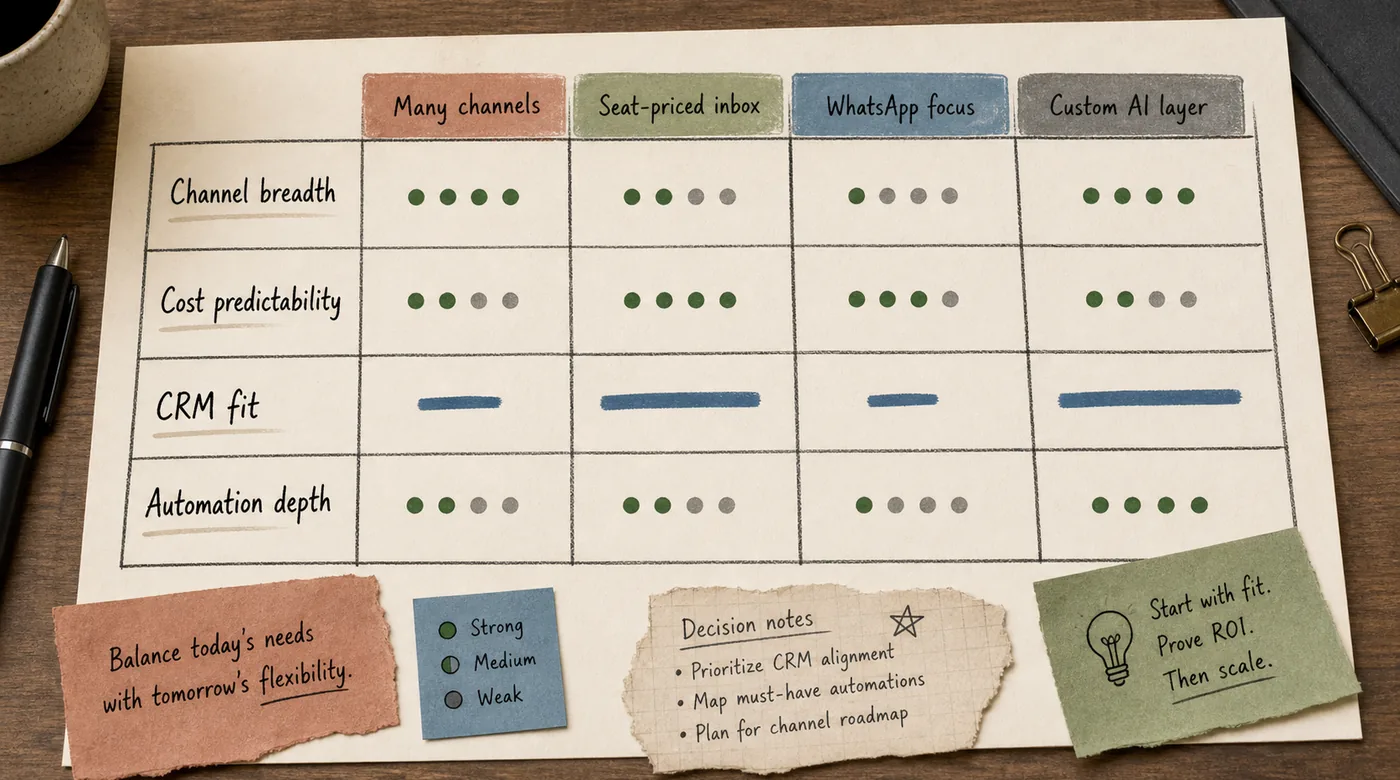
Respond.io and Trengo both compete on the same territory as Umnico — a unified inbox plus automation layer — but price per seat rather than per channel, which tends to be more predictable once a team passes three or four connected channels. WATI goes narrower: it's built specifically around the WhatsApp Business API for teams that don't need Instagram or VKontakte support at all.
Umnico's actual edge is channel breadth, especially VKontakte, Odnoklassniki, and Viber support that Western-built tools generally skip. If a business's customers are genuinely spread across that many channels, Umnico covers more of them out of the box than most Western unified-inbox tools. If the channel list is really just WhatsApp, Instagram, and email, a seat-priced competitor is usually cheaper past the first few months.
What no aggregator actually solves
Umnico, Respond.io, Wazzup, WATI — they're all built the same way underneath: they route a message to a human. That's fine while ticket volume fits inside two or three agents' working hours. It breaks down once volume outpaces the team, and keyword-based auto-replies can't handle "is this in stock in size 9" or "can you move my delivery to Saturday."
An aggregator doesn't fix that. It just shows the agent a faster-loading pile of unread messages. The real question stops being which inbox to read chats in and becomes whether the business needs a WhatsApp-native AI agent or similar layer that can actually check inventory or a booking calendar before it replies, routing to a human only the conversations that need judgment. That's a different build and a different price, but a different outcome too — not one screen for reading messages, but a system doing part of the work itself.
The API is where a custom build usually starts. Umnico exposes raw messages through its API, and a team can build logic on top — a bot that checks stock in an ERP before answering a customer, for instance. That's not a pricing-tier decision anymore; it's a build: someone has to design the flow, wire up the data sources, and test it against messy real conversations instead of a clean demo script.
When the aggregator is enough, and when it isn't
An aggregator like Umnico is the right call when channels are numerous, there's no CRM yet (or the team doesn't want to touch the one they have), headcount is small enough to keep up with volume, and most conversations are simple — a question comes in, gets answered, the thread closes.
Custom development earns its cost when ticket volume regularly outpaces the team, replies depend on live data (stock, appointment slots, order status), conversations need to handle more than one language or a genuinely informal tone, or the business is already paying for several aggregator modules and has effectively hired a team of agents to do repetitive typing by hand.
The test is simple: count how many daily messages actually require a human judgment call versus how many are a repeated question with a predictable answer. If it's mostly the second kind, wiring AI into the CRM usually pays for itself faster than the sticker price on a build suggests.
FAQ
Does Umnico integrate with Salesforce or HubSpot?
Not natively. Its prebuilt connectors focus on Bitrix24 and amoCRM. Salesforce or HubSpot teams would build against Umnico's API rather than install a ready-made app.
How much does Umnico cost in practice for a small team?
It depends on channel count and seats — pricing is modular, not a flat tier. Two or three channels for a two- or three-person team stays inexpensive; adding several WhatsApp numbers plus Instagram and Telegram at once pushes the bill up faster than the pricing page suggests.
Is Umnico better than a WhatsApp-only tool like WATI?
Better is the wrong frame — it depends on channel spread. Umnico covers more channels (VKontakte, Odnoklassniki, Viber) that WhatsApp-focused tools skip entirely. If WhatsApp is genuinely the only channel that matters, a WhatsApp-native tool is usually simpler and cheaper.
Can Umnico replace a real AI agent?
No. It routes and does keyword-based auto-replies, but it doesn't read conversation context or check live data like inventory or a booking calendar. That requires a purpose-built AI agent on top of the CRM or messaging layer.
If it's unclear whether an aggregator covers your actual ticket volume, count a week of real conversations first and compare that load against the cost of a proper GPT integration for the repetitive half of it. The price gap is often smaller than it looks, and the outcome gap is bigger.