
In short
Registering a Telegram bot takes five minutes through BotFather. Making it actually useful — handling orders, answering support questions, running a small storefront — is a small project, not a checkbox. The real decisions are: no-code builder or custom build, what the bot answers on its own versus what it hands to a person, and where the data it needs actually lives.
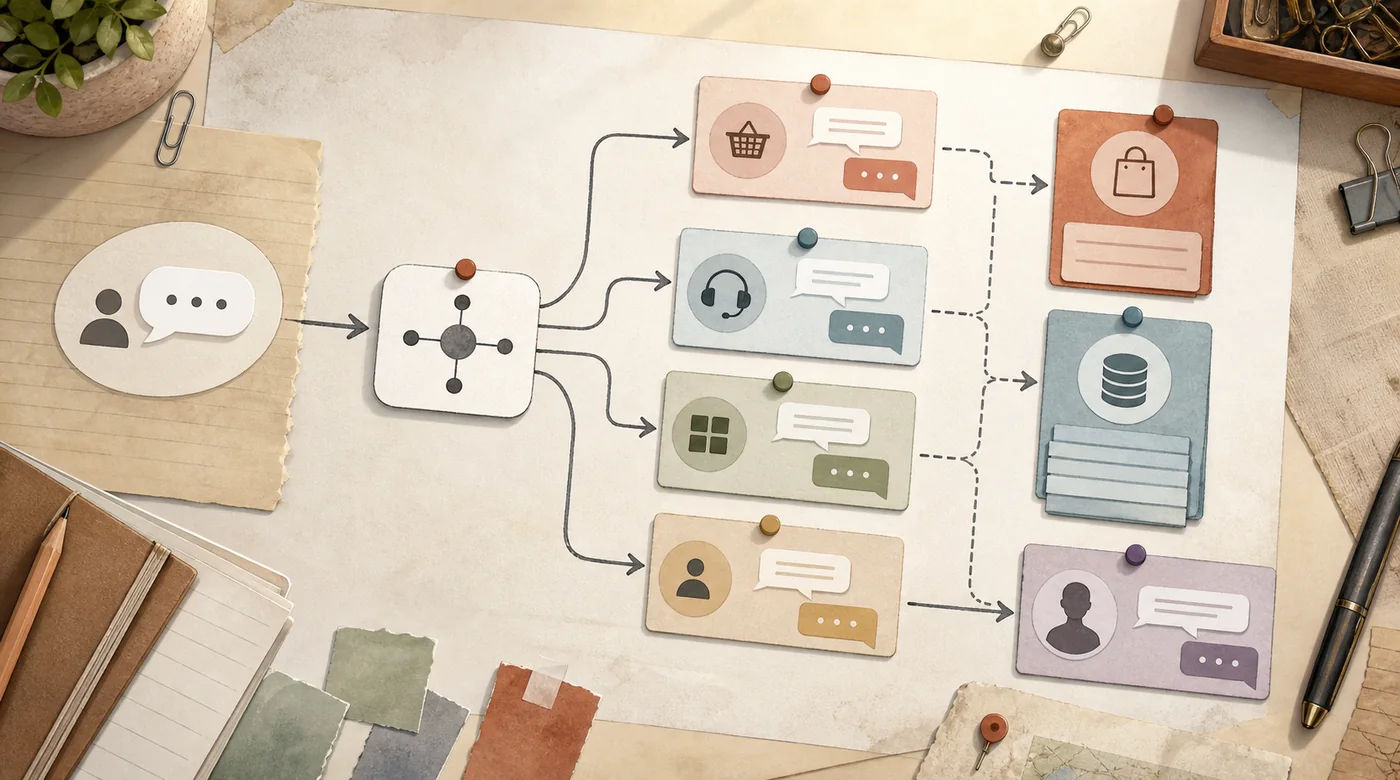
Telegram is a good channel for this because the Bot API is free, open, and has no per-message cost. That openness is also why the market is full of templates that all look the same. The bots that actually save time are the ones built around a specific workflow, not a generic FAQ flow.
What BotFather actually gives you
Every Telegram bot starts the same way. You message @BotFather, run /newbot, pick a display name and a username ending in "bot," and get back an API token — a long string that authenticates your bot to Telegram's servers. This is the only official way to register a bot, and it costs nothing: no registration fee, no per-message charge for standard Bot API calls.
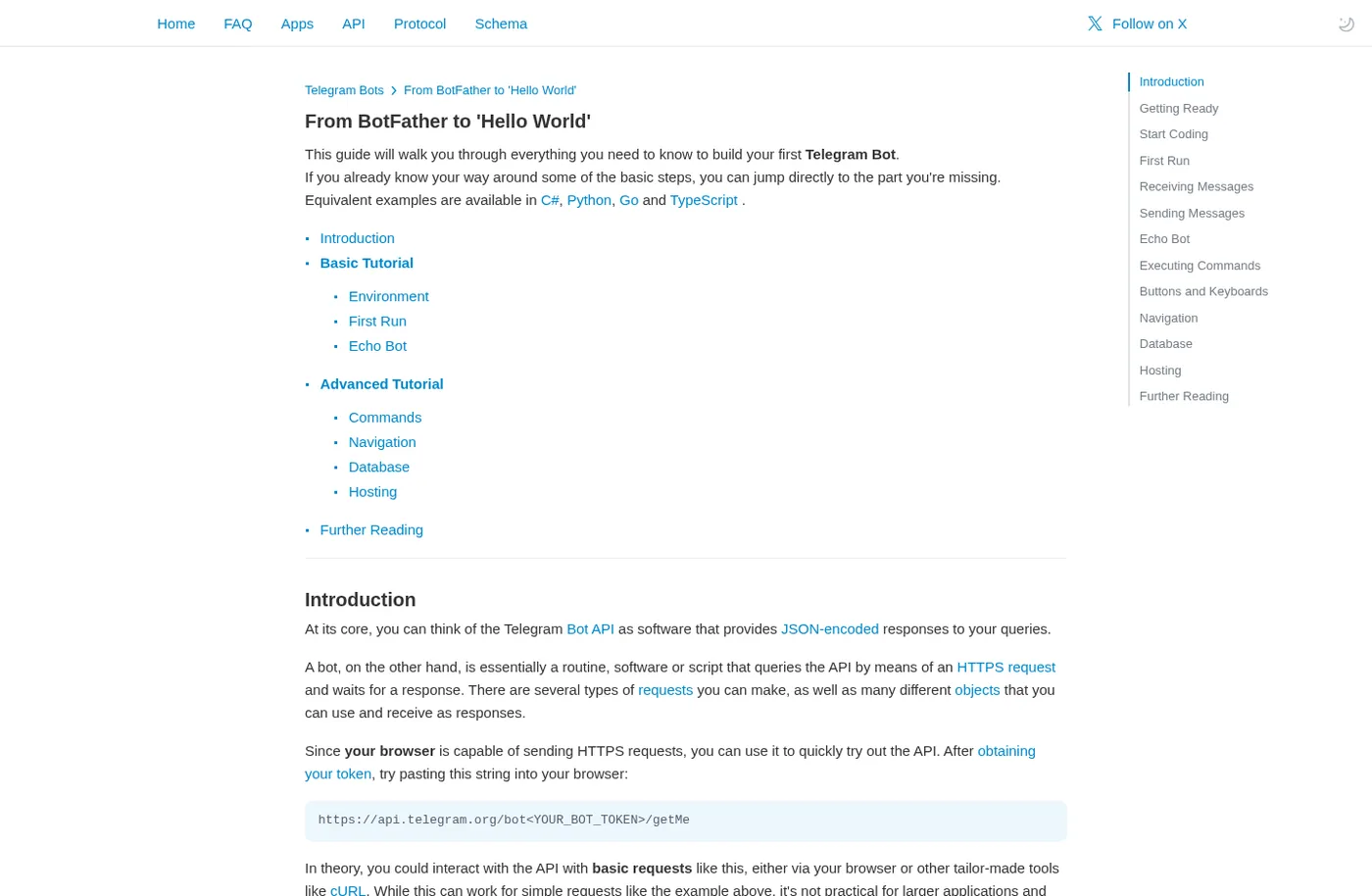
Source: the official Telegram Bots tutorial, public page captured in July 2026.

The token is a key, not a bot. On its own it does nothing — it needs to be connected to something that listens for incoming messages and decides how to respond: a no-code platform, a hosted automation tool, or your own backend calling the Bot API. From BotFather you also set the bot's description, profile picture, command menu, and inline settings. If you plan to sell digital goods inside the chat, Telegram Stars are now the only allowed in-app currency for that; for physical products or services, most businesses route payment through a card processor or an external checkout link instead.
Telegram also supports Mini Apps — full web interfaces that open inside the chat window, with a real UI instead of a button tree. For a simple flow (leave a request, check an order status) that's overkill. For a catalog with dozens of SKUs or a membership dashboard, a Mini App can be clearer than a long chain of inline buttons.
No-code builder or custom build
This is the decision that determines both the budget and the ceiling on what the bot can do.
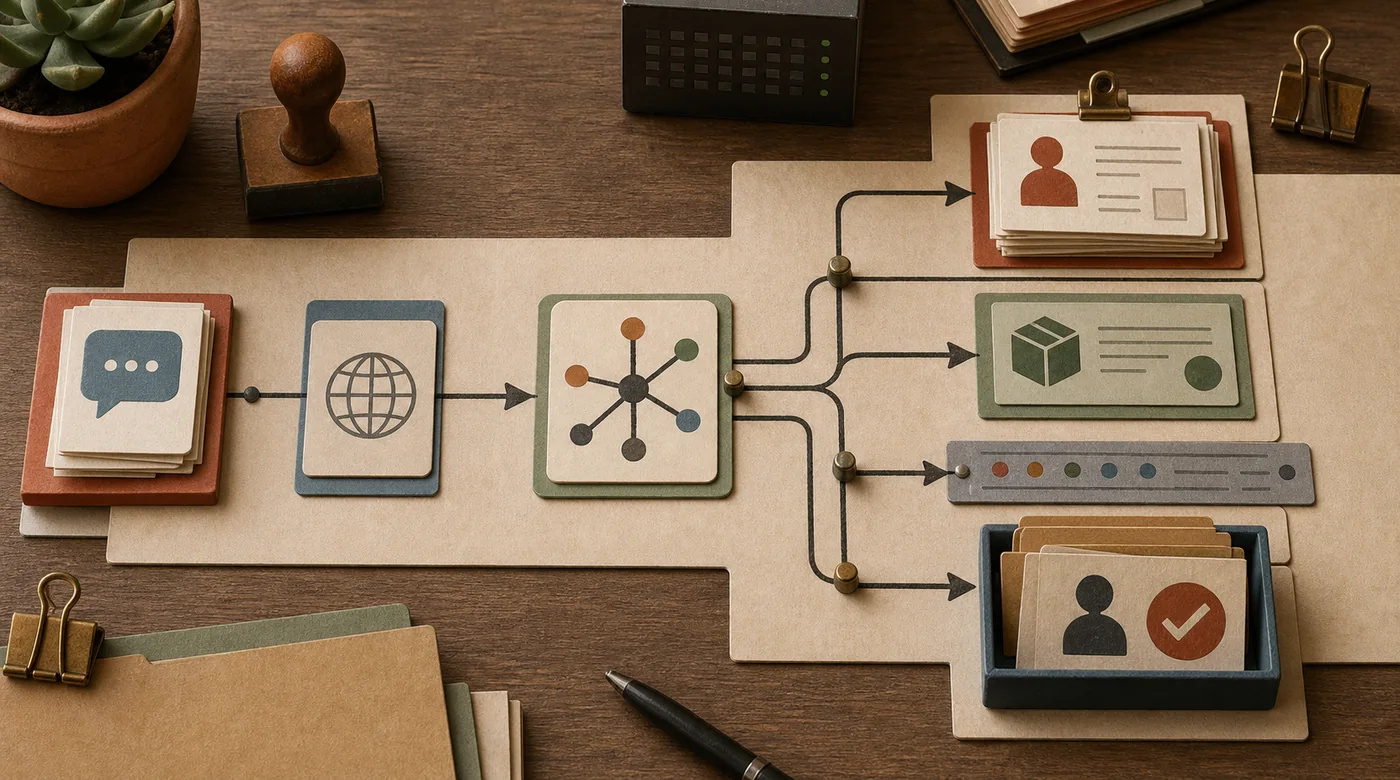
A no-code builder — Manychat-style flow builders, Landbot, or similar Telegram-focused tools — fits when the conversation is a flowchart: greeting, menu, contact capture, handoff to a sales rep, broadcast to subscribers. Setup takes hours, pricing usually runs from a free tier up to roughly $50-100/month for business-grade plans. The failure mode shows up once the flow gets complicated: branching logic turns into an unreadable mess of blocks, and free-text input from a customer gets matched by keyword at best.
Custom development — or a proper AI agent sitting behind the bot — is worth it once the bot needs to read arbitrary text, check live inventory, write order status back to a CRM, or hand off edge cases to a human with an explanation of why. That's a different order of cost than a builder subscription, but it doesn't hit a functionality ceiling three months in, which is exactly when most builder-based bots do.
A practical rule: if the whole flow fits on one page as a diagram with no real branches, use a builder. If customers type in free text instead of tapping buttons, and the right answer depends on data that changes daily, a builder becomes the bottleneck fast. This is the same trade-off covered in more depth in bot builder vs. custom AI agent, and it applies just as much to Telegram as to any other channel.
Use case: lead intake and order requests
The most common request is replacing a contact form or a missed call with a bot that works nights and weekends. The flow is simple: the customer messages the bot, the bot asks for whatever's missing (what they need, timing, budget, location), builds a structured request, and drops it into a team channel or CRM.
The gap between a working bot and a toy shows up on messy input. A customer sends a voice note, a photo, or replies with one word like "interested." A button-based bot stalls or loops the same prompt. A bot with a language model behind it transcribes the voice note, treats the photo as context, and adjusts the next question based on what's already been said. That difference shows up in completed-request rates within the first week.
Use case: a storefront inside the chat
For retail and small wholesale, Telegram has worked as a real storefront for years, especially with audiences already used to browsing catalogs inside a chat app. The working pattern: product cards with photos and price, an add-to-cart step, checkout with address and payment method, and automatic status updates as an order moves through fulfillment.
The detail that decides whether this works is where the bot gets its stock and pricing data. If the price list changes manually once a week, a spreadsheet feed is fine. If the catalog is large and turns over daily, the bot needs a live sync with the inventory or CRM system — otherwise it will keep selling items that are already out of stock. This is where most builder-based storefronts hit a wall: off-the-shelf platforms don't integrate cleanly with a custom inventory export, and teams end up either updating stock by hand or moving to a proper CRM integration.
Use case: customer support
A support bot earns its keep on the questions that repeat: order status, shipping policy, returns, business hours, how to pay, where's my package. Most support teams report that this category makes up the bulk of incoming volume, and deflecting it is the fastest way the bot pays for itself.
The architecture that actually works has the bot answering from the company's real knowledge base — current documents, not text hardcoded into a script — and handing off explicitly when a question falls outside that scope: a complaint, a refund dispute, anything with legal or safety implications. The mechanics are close to what's described in how AI answers customers in WhatsApp — the logic transfers almost directly, the difference is mostly in the message-delivery layer.
Telegram versus other channels
For a global business, the channel question usually isn't Telegram versus nothing — it's Telegram versus WhatsApp Business API, versus a website widget, versus SMS. Telegram's advantage is the free, well-documented Bot API and inline Mini Apps; WhatsApp's advantage is that in most consumer markets outside a specific set of countries, it's simply where more people already are. Telegram tends to win with tech-savvy audiences, crypto and fintech communities, and any business already running a content channel it wants a bot attached to — the same subscriber base is right there.
The practical answer for most teams: build the bot's logic — order handling, knowledge base, CRM sync — as a layer that's independent of the channel, then add Telegram as one delivery surface among possibly several. Rebuilding the whole thing per channel is the expensive mistake.
What the bot should not do on its own
A bot should not approve anything involving money without confirmation — refunds, discounts beyond policy, price exceptions. It should not promise a delivery date the system doesn't support. And if a customer directly asks whether they're talking to a bot or a person, it should say so. A well-designed bot hands off cleanly; that's a sign of good design, not a limitation to hide.
It's also worth deciding upfront what happens when the bot doesn't understand a message. The bad version repeats the same prompt in a loop. The working version admits it didn't understand and offers to bring in a person immediately.
Running a two-week pilot
Week one: pick one process — intake, storefront, or support — and resist the urge to cover everything at once. Pull real conversations from the last month if you have them in any channel; they show how customers actually write, not how you assume they will. The same staged approach is laid out in more detail in running an AI pilot in 30 days, if you want a longer runway than two weeks.
Week two: route a slice of traffic through the bot — one acquisition channel, or off-hours only — and compare it against how those messages were handled before. Track three numbers: how many conversations reached a usable structured request, how often the bot handed off to a person and why, and how many customers dropped out without an answer.
If the bot isn't confusing customers and is taking real load off staff after two weeks, expand it to the rest of the traffic. If it is confusing people, don't scale it — fix the flow on the narrow slice first, where a mistake is cheap to catch.
FAQ
How much does a Telegram bot for business cost?
A no-code builder with a standard flow runs from free up to roughly $50-100/month. A custom build with CRM, inventory, or backend integration is a different budget entirely — closer to a small software project than a subscription. The planning steps are the same ones covered in how to implement AI in a small business: a bot with real integrations is effectively a small AI project, budgeted the same way.
Can I build a Telegram bot without a developer?
Yes, for standard flows like lead capture or broadcast messaging, a no-code builder is enough. Once you need conditional logic, live data lookups, or free-text understanding, you need either a developer or a platform with an AI agent behind the chat.
Do I need a separate bot if I already have one on another channel?
Not from scratch. The order logic, knowledge base, and CRM integration can be reused, with Telegram added as a second delivery channel. Rebuilding the whole flow per channel wastes the part that actually took the work to get right.
How fast does a Telegram bot pay for itself?
For intake and standard support, the first results usually show up in two to three weeks: fewer missed messages, faster first response. A storefront bot with live inventory sync takes longer, because it depends on getting the data feed right first.
If you're not sure where to start, pick the one process currently running through a single employee's inbox and try moving its logic into a bot over a two-week pilot. That will tell you whether a builder is enough or whether you need a proper AI agent behind it.